Early in Reiki practice, a familiar friction tends to show up: a client is on the table, your hands are placed, and you wonder if anything is happening. The reflex is to do more—move too quickly, reach for symbols before the moment calls for them, or try to “push” from your own reserves. Usually, that creates strain: the session feels less settled, the practitioner ends up tired, and the recipient leaves unsure of what they experienced.
The real shift isn’t about adding more technique. It’s about understanding universal life force energy in Usui Reiki—and what it asks of the practitioner. Practice becomes steadier when you stop trying to manufacture an effect and instead relate to the current as something you align with.
Key Takeaway: In Usui Reiki, the most reliable results come from aligning with universal life force energy rather than trying to generate or force it. When you practice as a channel—steady, present, and boundaried—the session often reveals itself through simple signs like breath changes, warmth, emotional settling, and deep calm.
What Universal Life Force Energy Means in Usui Reiki
In Usui Reiki, universal life force energy isn’t just an idea to hold in the mind. It’s a living current the practitioner attunes to and collaborates with. Many descriptions of Reiki emphasize as a conduit rather than as the origin of the flow.
Within the tradition, Rei is often understood as the universal or spiritually guided aspect, while Ki refers to the animating life force present in all beings. Across lineages, practitioners also notice how this resonates with other cultural life-force frameworks such as Qi and Prana. The words differ, but the recognition is often the same: something subtle, intelligent, and organizing is already present.
That distinction shapes everything. If you relate to Reiki as something you generate, you’ll tend to force. If you relate to it as something you join, you naturally become quieter, steadier, and more observant. This is where “channel, not source” stops being a slogan and becomes a working posture.
In practical terms, your role is simple but meaningful: create conditions the session can trust. Presence, consent, clear boundaries, and calm attention give the Reiki flow space to organize itself. That approach is also sustainable—because you’re not trying to spend yourself to create an outcome—and inclusive, because recipients can meet Reiki through felt experience and self-awareness without needing to adopt a particular belief system.
From there, the work becomes surprisingly plain. Prepare the space, settle your breath, place your hands, and allow. You don’t need to perform certainty, chase sensation, or try to fix. Over time, many practitioners find that the less they interfere, the clearer the current becomes.
That’s also why experienced practitioners often speak more about relationship than display. Symbols, hand positions, and structure all have their place, but they rest inside a deeper posture: humility, listening, and trust. As that posture matures, it often influences more than sessions—it shapes how you speak, how you hold boundaries, and how you move through daily life, including through self-Reiki.
How Reiki Flow Feels in a Session
You usually recognize Reiki flow not through theory, but through shifts in the room. Something begins to settle beyond ordinary rest: the body softens, the breath changes, and emotions reorganize in quiet but noticeable ways. Review literature has linked Reiki with measurable relaxation, which helps explain why these changes can feel different from simply lying still.
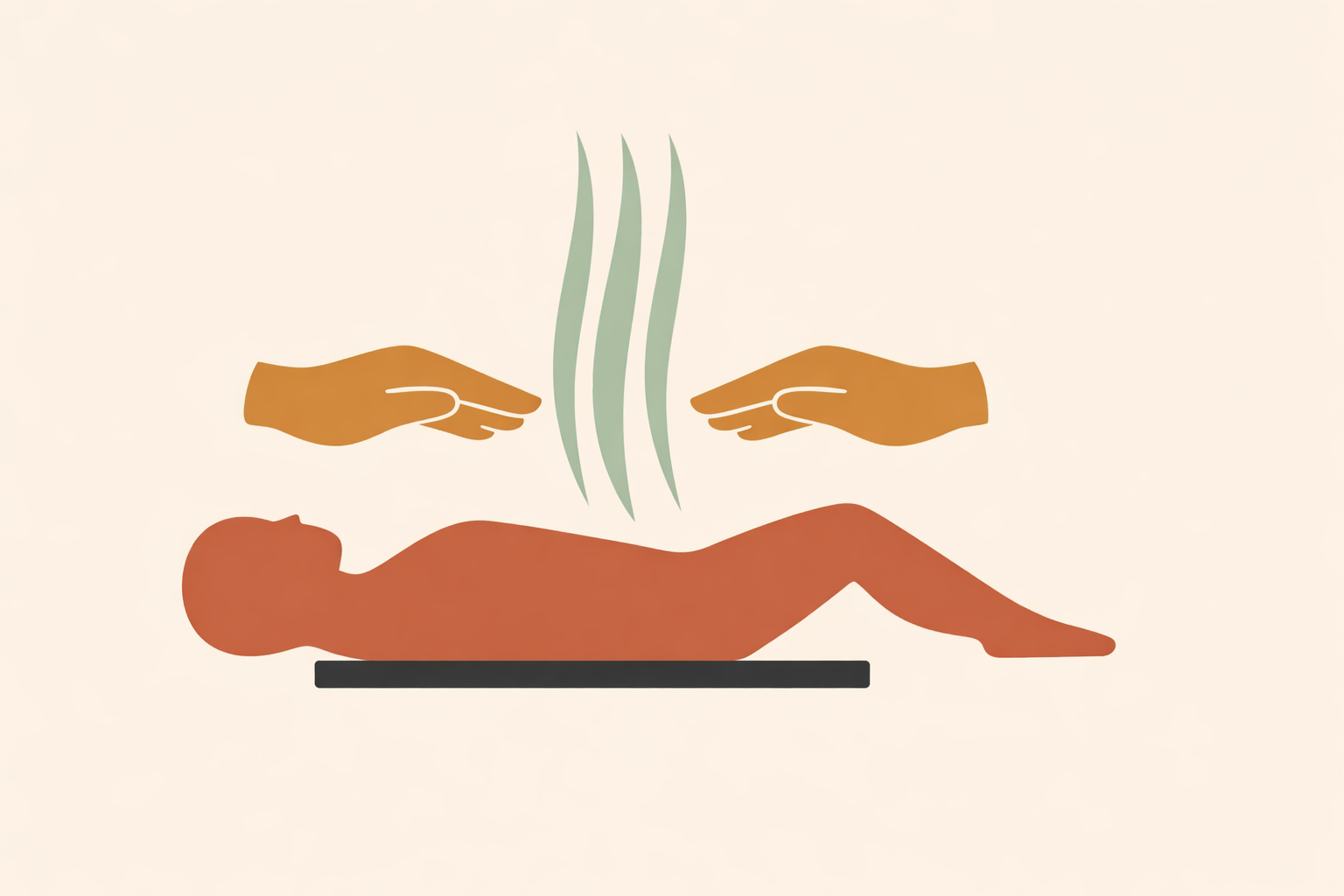
For many recipients, the first signs are physical: warmth, tingling, wave-like movement, heaviness, lightness, or a sense that tension is dissolving. Public discussion of Reiki has described waves of energy and other body-based sensations during sessions. In everyday practice, a spontaneous deeper breath followed by release in the shoulders or jaw is often one of the earliest clues that the system is letting go.
These shifts aren’t only physical. Emotional settling often travels alongside the felt flow. A recipient may grow quieter, soften around the face, or drop into a deeper ease. Many descriptions note that people feel very relaxed afterward—sometimes calm and clear, sometimes simply “held.”
In the room, useful markers often include:
- Breath: a fuller inhale, a longer exhale, or a spontaneous sigh
- Temperature: warmth, coolness, or a wave-like change under the hands
- Micro-movements: swallowing, tiny twitches, softening around the eyes, jaw, or belly
- Emotional release: tears, quiet laughter, restlessness that gradually eases
- Time shift: the session feels much shorter than the clock suggests
When those signs appear, less is often more. Slower hands and steady presence let the body unwind at its own pace. Think of it like allowing a wave to finish breaking—if you keep chasing the crest, you interrupt the natural settling that comes afterward.
It also helps to normalize subtle sessions. Some recipients feel a great deal. Others feel almost nothing in the moment and only notice changes later: deeper sleep, more self-kindness, less reactivity, or a different relationship to stress. Strong sensation isn’t the measure of depth.
A light structure can keep the work observable without turning it into a test:
- Before: invite a short body check-in. Notice the jaw, neck, shoulders, chest, and belly. Where is there ease, and where is there holding?
- During: track simple markers such as breath, warmth, softening, and the overall tone of the room.
- After: return to the same body scan and ask what feels different, even slightly.
This helps recipients stay connected to their own experience, which matters because the current meets willingness. One public discussion puts it plainly: it works when the person is open. Openness doesn’t need to mean strong belief—often it simply means permission to rest, receive, and notice.
What to Do When the Session Feels Tender
Not every shift feels light at first. Sometimes the flow brushes against tender material: sadness, a memory, restlessness, or a brief feeling of inner pressure before ease arrives. That doesn’t automatically mean something is wrong. Often, it means the system is finally contacting a place that needs space.
When that happens, the most skillful response is usually the simplest: slow down. Keep your hands steady. Let your presence communicate safety rather than urgency. If needed, pause and invite the recipient to notice their breath or the contact of the table beneath them. The aim isn’t to force meaning or pull for disclosure—it’s to support steadiness so the process can unfold in a grounded way.
This is where boundaries become part of good practice. Reiki isn’t about managing someone else’s inner world for them. It’s about offering a trustworthy container in which balance can emerge naturally. When you’re less invested in producing a dramatic outcome, it becomes easier to stay respectful, attuned, and responsive.
A Sustainable Reiki Posture for Everyday Practice
The “channel, not source” posture changes the quality of practice over time. It reduces over-efforting, makes sessions feel more spacious, and helps you avoid confusing intensity with depth. Put simply: when you stop trying to supply the whole session with your own will, your work becomes more sustainable and more honest.
It also keeps Reiki kind and inclusive. Recipients don’t need to perform sensitivity, create a spiritual storyline, or react in a certain way to “do it right.” They can simply arrive as they are, and your role is to meet them with respect, consent, and steady attention.
Seen this way, universal life force energy becomes less mysterious in the abstract and more recognizable in practice. It’s there in the warmth under the hands, the breath that deepens on its own, the quiet emotional settling, and the sense that something wise moves forward when you stop trying to control it.
Conclusion
Universal life force energy in Usui Reiki becomes real through relationship. We meet it by listening, softening, and allowing ourselves to serve as a conduit rather than a source. From that stance, sessions often become clearer, gentler, and more trustworthy.
Over time, this changes more than technique. It shapes how we hold space, how we respect boundaries, and how we understand support itself. Reiki can support growth and well-being, but its wisdom is often simple: slow down, pay attention, and let balance emerge without force.
As with any supportive practice, it’s wise to stay within your scope, keep consent central, and refer out when someone needs specialized help beyond what a Reiki session can offer. Keep the lineage close, honor cultural roots, and stay teachable. Most of all, trust what is actually felt in practice—the current is already here, and the work is to make space for it.
Master Reiki Channeling Skills
Deepen this “channel, not source” approach with the Reiki Master Certification.
Explore Reiki Master Certification →