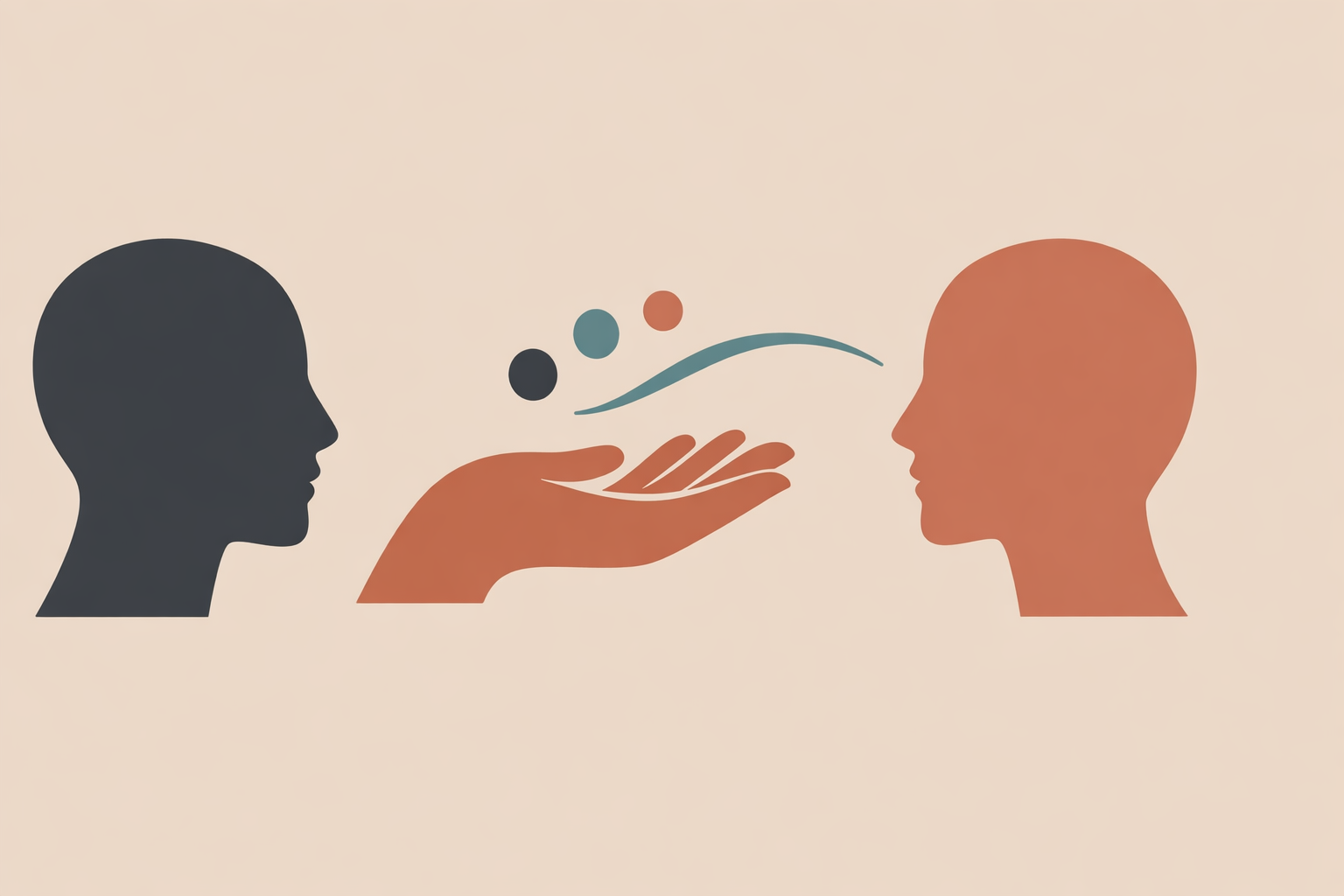
Many teams respond to distress by adding more words. Someone asks for “home” again, freezes during washing, or turns away when invited to sit, and the instinct is to explain, repeat, and persuade. In dementia, that extra language can create friction because complex sentences can become harder to follow.
A steadier approach is to rely less on explanation and more on signal. In dementia support, non-verbal communication often becomes the main channel. Presence, pacing, gesture, tone, touch when welcome, and familiar sensory cues can carry meaning long after conversation starts to feel like hard work.
Key Takeaway: When language becomes unreliable, connection often depends on what is felt and perceived rather than what is explained. Reducing language load, reading behaviour as meaningful communication, and using calm sensory cues can make daily support clearer, steadier, and more humane.
Reading Behaviour as Communication
What looks random often has a reason. Many behavioural and emotional changes are better understood as unmet needs expressed through the body, routine, or mood.
Pacing, calling out, pulling away, going quiet, or resisting a task can signal discomfort, uncertainty, overload, or a need for familiarity. When behaviour is treated as a message rather than defiance, responses become calmer and more effective.
Common patterns practitioners notice include:
- tension around the eyes or jaw can signal effort or discomfort
- fidgeting with clothes may reflect temperature discomfort, itch, or unease
- walking faster can suggest urgency, while freezing can suggest fear or overload
- new refusals often appear when a basic need has not yet been met
That last point matters. Everyday discomforts like thirst, hunger, fatigue, bladder pressure, constipation, or skin irritation can sit underneath agitation or resistance.
So pause before correcting. If someone heads for the door at the same time every afternoon, the question isn’t only how to stop it. Ask what the movement might mean: a remembered routine, a need for walking, a desire for transition, or an emotional pull toward home.
Your Presence Comes First
Before words, people read people. Tone, facial expression, pace, posture, and distance shape whether an interaction feels steadying or intrusive. Calm communication is consistently encouraged because caregiver tone can influence distress and perceived safety.
One of the most reliable skills is self-regulation: settle yourself before you try to guide someone else. Dropped shoulders, a softer jaw, an unhurried pace, and a warm voice already communicate safety.
A quick reset can take less than half a minute:
- exhale a little longer than you inhale
- slow your walking before you approach
- let your face soften
- come into view from the front
- pause before asking for anything
When distress rises, words are often the first thing to go. People may lose words or struggle to understand speech, especially under strain. In those moments, “I’m here” or “We can go slowly” is usually enough.
Touch, Gesture, and Positioning
When welcome, touch can communicate reassurance quickly. Showing can also be clearer than telling: an offered palm, a cup lifted to mime drinking, or a sleeve indicated with eyes and fingers can reduce confusion.
Consent and positioning make all the difference. Approach from the front, stay within the person’s visual field, come to eye level where possible, and give enough space for the other person to orient. Then offer rather than impose.
Many family and community traditions hold gentle grooming rituals as quiet languages of care for elders, such as brushing hair, oiling hands, or applying balm. Used respectfully and without assumption, these familiar actions can support dignity and ease.
If touch isn’t welcome, don’t force it. Clear gesture, slower pacing, and visible demonstration are often enough.
Using Sensory Supports When Words Are Hard
When verbal understanding is reduced, sensory comfort matters even more. Reviews suggest sensory interventions such as calming music, aromatherapy, and hand massage can help reduce agitation.
This aligns with long-standing practice wisdom: calm presence plus sensory ease can settle a moment even before an explanation lands.
Supportive sensory choices often include:
- soft, even lighting
- reduced background noise
- familiar textures and objects
- clear contrast between important items and surfaces
- predictable sensory routines at the same time each day
Visual guidance helps too. Labels, photos, uncluttered surfaces, and obvious object placement reduce the need for verbal prompting. A bright placemat under a white mug, a photo on a bathroom door, or a coat left in view can quietly cue the next step.
Many households also create small memory corners with meaningful objects: a scarf, a tool, prayer beads, a family photo, a textile, or a favorite cup. These anchors can support orientation and identity without turning the interaction into a test, and they fit naturally within broader brain health support.
Music, Rhythm, and Familiar Cues
Music often reaches where spoken language can’t. Individualized and interactive music has been linked with reduced agitation and greater engagement in dementia settings.
In day-to-day support, familiar music often brings more eye contact, softer breathing, humming, tapping, or spontaneous singing. These are meaningful signs of connection.
Simple approaches tend to work best:
- choose music with personal meaning
- keep the volume low and steady
- sit beside rather than opposite
- hum or breathe with the rhythm
- stop if the person seems overstimulated
Rhythm helps beyond music. Folding towels together, walking in step, rocking gently in a chair, or repeating a familiar phrase at a predictable pace can create structure that feels settling.
Culturally rooted songs, chants, and household rituals can be especially powerful when they truly belong to the person’s life story. Used with respect, they support continuity rather than performance, much like music support that stays person-centered and culture-safe.
A Practical Way to Respond in Difficult Moments
When behaviour is treated as communication, support gets more practical. Ask, “What is being communicated, and what would make this moment easier?”
One simple framework is:
- Name the feeling: “This seems hard” or “You want to go home.”
- Align your body: slow down, soften your face, lower your voice.
- Modify the demand: reduce steps, offer a familiar object, change rooms, or pause the task.
- Ease the environment: lower noise, adjust light, offer a drink, add music, or walk together.
- Document what helped: note the cue, the likely meaning, and the response that worked.
This matches broader guidance that recommends checking for discomforts and adjusting the environment when distress rises. Often, underlying needs are more workable than the behaviour itself.
Creating Shared Cue Dictionaries
A good moment helps, but repeatable patterns help more. The real progress comes when families and teams build a shared understanding of what a person’s signals tend to mean.
A cue dictionary is a short, living record of identity, habits, stress signals, and settling supports. It turns one person’s intuitive knowledge into something everyone can use.
A practical template might include:
- identity anchors: favorite music, routines, important relationships, spiritual or cultural practices
- common signals: pacing at dusk, pulling sleeves, turning away, calling for a parent
- likely meanings: tiredness, wanting transition, needing privacy, needing reassurance
- what helps: tea in a certain mug, slower approach, humming, a short walk, dimmer light
- what overwhelms: rushed instructions, bright glare, multiple voices, unfamiliar touch
These notes don’t need to be elaborate. They need to be specific and shared. “Walk with her first, then offer tea in the red mug” is more useful than a vague note about agitation, and this kind of observation is central to dementia support skills.
Closing Perspective
Non-verbal communication is often the main skill in dementia support. As language becomes harder to use and interpret, the work leans into presence, pacing, rhythm, touch when invited, sensory comfort, and familiar forms of meaning.
This shift stays practical while also being deeply human. It asks you to look past missing words and attend to what is still being expressed through the face, the body, the room, the ritual, and the relationship, which is also part of a wider neuroscience and brain health perspective.
One caution belongs at the end: not every signal has a single meaning, and no approach fits every person. The most useful stance is attentive and respectful, with a willingness to keep learning from what the person shows you.
Even when speech fades, connection can remain strong. It simply speaks a different language.
Train in Dementia Support Skills
Build on these non-verbal strategies with the Dementia Certification Course for steadier, more person-centred care.
Explore the Course →