Many practitioners meet the same sticking point: a dyslexic learner hits a dense prompt or multi-step instruction and the session tilts toward overwhelm. Rereads multiply, placeholding slips, time expands, and emotions rise. Adding more verbal scaffolding often adds more strain. What the moment usually needs is load-sharing.
Visual-spatial support can help by making structure visible. When sequence, relationships, and next actions are placed on the page or in the hands—maps, boxes, tokens, tiles—the task no longer lives only in working memory. The aim is straightforward: notice where visual structure lowers effort, pair it with practical access tools, and keep testing what genuinely helps in real-life learning.
Key Takeaway: Visual-spatial strengths can ease dyslexic overwhelm when they make structure and sequence visible, reducing how much must be held in mind at once. The most useful supports are usually small, concrete, and closely matched to the task: a sequence strip, a map, a few movable notes, or a one-page planning board. Used well, these tools can support reading, writing, planning, and emotional steadiness without forcing any learner into a rigid “visual” identity.
When visual-spatial supports help reduce dyslexic overwhelm
Overwhelm is not a character flaw. It often signals that the load has become too high for the task as it’s currently presented. In dyslexia, cognitive load increases when dense text must be decoded, verbal instructions stack up, and working memory is already under pressure.
A familiar example: a learner stares at a three-paragraph prompt, rereads the same lines, loses their place, and starts to rush internally. Instead of repeating the instructions, it often helps to externalize the task. Circle three key words. Draw a simple arrow from “Question” to “Evidence” to “Conclusion.” Put the first action in a box. Now the eyes and hands have something concrete to do.
Early overwhelm often shows up as rushing, repeated rereading, irritability, shutdown, or avoiding the page. Treat these as helpful cues. Reduce language, trim choices, and name one clear next step.
Visual-spatial supports work best when they turn invisible mental demands into visible, graspable forms. A timeline, a token for each step, or a simple “First—Next—Finally” strip makes sequence feel manageable. When structure is visible and information can be moved around, effort often redistributes and overwhelm eases.
Where the load tends to build in everyday tasks
Different tasks strain different parts of the system. In dyslexia, load concentrates in different places depending on the activity:
- Reading: decoding, tracking across lines, and holding meaning while moving through text
- Writing: planning, spelling, sentence construction, and keeping the overall idea in view
- Organization: time estimation, sequencing, and coordinating multiple steps
Once you can see where the load is gathering, choosing support gets easier. A learner may have strong ideas but stall because the order of action is invisible. Another may understand the task and still lose momentum because the page feels endless.
Visual scaffolds can free attention for meaning by holding structure externally. A three-column board like “To Read / To Note / To Do” separates intake from action. For longer work, a row of boxes labeled “Open, Find, Read, Highlight, Summarize, Submit” turns one big demand into stages you can point to and complete.
What visual-spatial strengths in dyslexia really are
Some dyslexic learners show strong pattern-spotting, big-picture noticing, design thinking, or ease with visual relationships. Others don’t. Many show a mixed profile that shifts with context, fatigue, and task type.
That’s why “relative strengths” is the most useful frame. The practical question is whether a specific kind of visual-spatial support helps this learner with this task today.
Practitioner experience reflects this variability. One learner may grasp the overall shape of an essay quickly and still struggle with small symbol differences. Another may naturally organize ideas through space and movement, yet find label-heavy diagrams draining. The most reliable stance is curiosity and careful observation.
This stance also protects against pressure. Telling someone they “should be visual” can become one more burden. Keep it collaborative: try one format, watch what changes, and keep only what reduces effort.
How visual-spatial strategies turn overload into clarity
Visual mapping tools help because they show relationships without requiring the learner to extract structure from a wall of text. A mind map, timeline, storyboard, or relationship diagram can give the task a shape. Once the shape is clear, starting often gets easier.
For example, an adult learner opening a policy document can feel blocked by two dense pages. Convert the first section into four notes—“Context → Rule → Exception → Action”—and the document has landmarks. It becomes easier to follow, summarize, and return to after a pause.
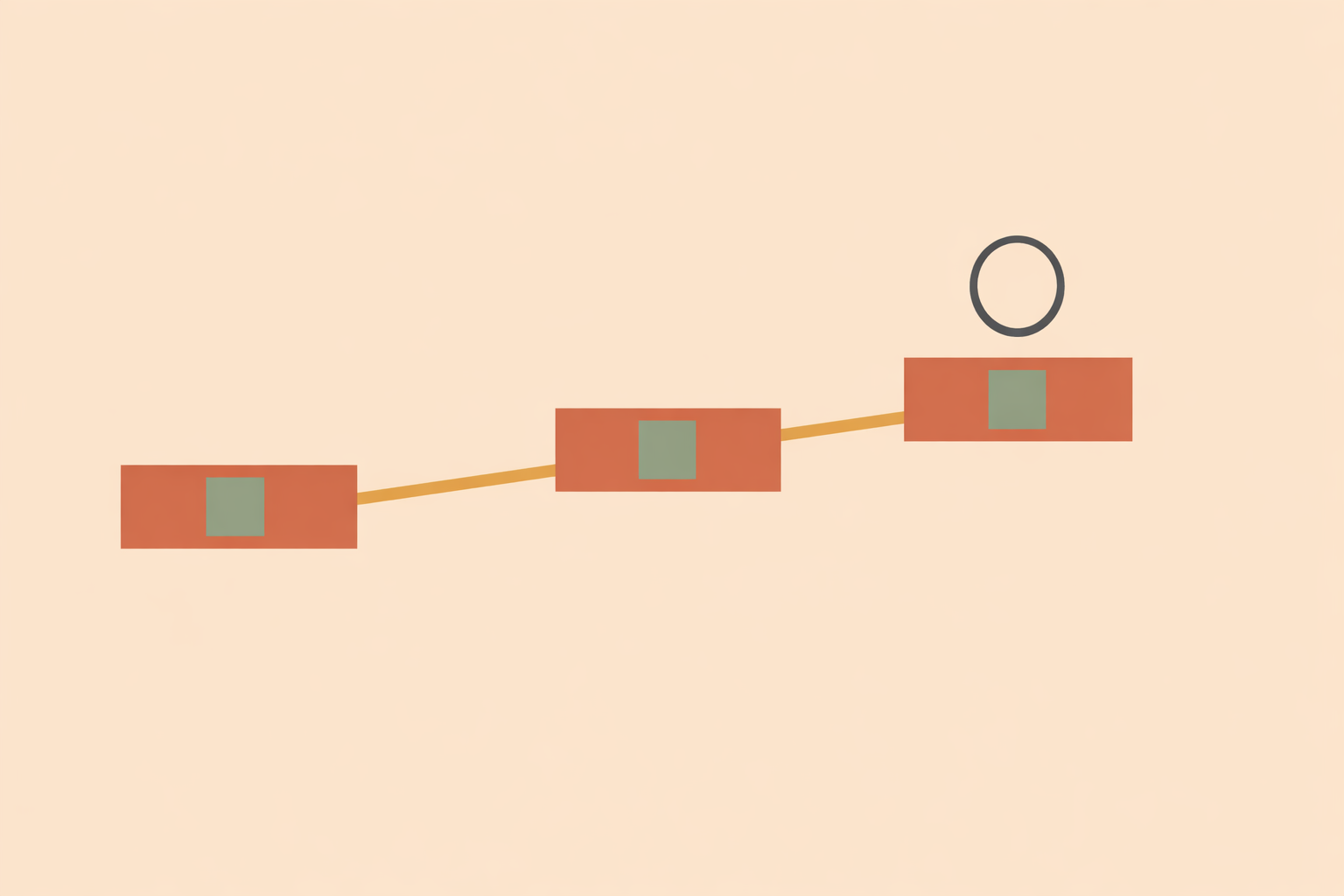
Visible sequence is often the turning point. “Open → Find → Read → Highlight → Summarize → Submit” gives the mind a path to follow. The task feels finite because the steps are right there.
Flow-like conditions matter too: clear goals, immediate feedback, right-sized challenge, fewer interruptions, and some autonomy help visual strengths show up more reliably. This can stay simple. Offering a choice between a timeline or a cluster map can build ownership without adding complexity.
- For reading: draw one box per section and write a verb in each, such as “skim,” “choose,” “read,” “note.”
- For writing: sketch three boxes labeled “Idea,” “Evidence,” and “Wrap” before drafting.
- For planning: create three spaces labeled “Today,” “This Week,” and “Later,” then move notes between them.
Visible structure reduces the amount of coordination that has to happen all at once.
Designing visual supports that genuinely ease effort
The best visual support is often the smallest one that clarifies the next action. If a tool increases fatigue, hesitation, or confusion, simplify it or drop it.
Many practitioners begin with three design questions:
- What confusion is this visual reducing right now?
- Can it fit on one page or one screen?
- What is the next action after looking at it?
Small tends to beat impressive. A single arrow, a short sequence strip, or three sticky notes often outperforms a beautifully designed but cluttered worksheet.
Visual support should also be paired with practical access support. Thinking aids and access aids do different jobs, and both matter. Audio support can reduce decoding strain while a simple map holds meaning. Morpheme tiles, sound boxes, or color-coded word parts can support word-level work while keeping the task concrete.
A good rule is: support thinking, and support access. Don’t ask the visual to do everything.
Body, rhythm, and environment matter too
Visual-spatial support lands best when the environment supports the nervous system. If the body is already overstimulated, even a clear visual can feel like noise.
Simple regulation practices often belong near the beginning. Softer lighting, fewer competing objects on the desk, a brief movement break, or a quiet pause before starting can change the whole session. Keep the language practical: “My system is speeding up,” or “I need to make one step visible before I continue.”
Circadian-hygiene practices such as regular sleep and wake windows, morning light, calmer evenings, and realistic workload planning also support steadier attention and mood. Think of these as stabilizers that make learning feel less jagged across the day.
Rhythm helps as well. Walking, sweeping, weaving, sketching patterns, arranging objects, or other steady hand-based actions can settle attention back into the body. Across many traditions, rhythm and repetition have long supported memory, learning, and orientation. Used with respect, these practices pair naturally with neurodiversity and learning differences.
When visual strategies backfire
Not every visual helps. Sometimes the “support” becomes another source of load.
Common problems include too many colors, too many arrows, decorative icons, tiny labels, or a diagram that needs its own explanation. In these moments, subtraction is often the fix. Remove anything that doesn’t make the next action clearer.
Visuals can also fail when they increase what must be held in mind. One map may help; three maps plus a legend often won’t. Some learners get pulled into making the page look good instead of using it. Others find certain spatial formats disorienting.
Early signs that a visual is not helping include:
- initiation takes longer than usual
- the eyes keep scanning without landing
- questions focus on the diagram instead of the task
- tension rises once the tool appears
When that happens, stay collaborative. Try the task with and without the visual and compare which version feels lighter. Let the learner’s experience lead.
Using visual-spatial strengths ethically and effectively
The most grounded practice is flexible, observant, and modest. Visual-spatial strengths don’t erase dyslexic challenges, but they can create real traction when the format fits the person and the moment.
A practical sequence often looks like this:
- notice early overload cues
- identify where the load is gathering
- choose one small visual support
- pair it with one access support if needed
- test it in a real task
- review what reduced effort and what added effort
Track functional outcomes rather than identities. Time to start, number of rereads, ability to complete planned steps, and recovery after frustration are often more useful than asking whether someone is “a visual learner.”
In the end, the goal is to widen routes to clarity, agency, and steadier effort. Start small, stay responsive, and let visible structure do what it does best: make the next step easier to find for dyslexia coaching.
Explore Dyslexia Coach Certification
Build practical, ethical support skills with the Dyslexia Coach Certification for real-world learning and regulation needs.
Explore Dyslexia Coach →