Most new yoga teachers start with what students can see: poses, playlists, and peak-shape goals. A class can look polished and still feel uneven when breath gets noisy, sequencing wanders, hands-on support feels uncertain, and the landing is rushed. Even experienced practitioners can feel this gap when someone asks for a simple structure they can repeat at home.
What helps is a clear frame that links philosophy to movement, so breath, gaze, props, pacing, and rest all have a place.
Key Takeaway: Strong yoga teaching becomes simpler when it rests on a coherent map. Through an Ashtanga Vinyasa lens, that map begins with ātman and Patañjali’s eight limbs, then moves into style distinctions, breath-led practice, movement fundamentals, repeatable sequencing, drishti and bandhas, ethical adjustments, and daily habits that help practice stay alive beyond the mat.
Ātman and the Eight Limbs: The Teaching Map
In an Ashtanga Vinyasa lens, ātman can be understood as the steady witnessing presence beneath changing thoughts and sensations. From there, Patañjali’s eight limbs offer a practical structure that organizes practice across ethics, posture, breath, attention, meditation, and absorption.
For teachers, the limbs translate big ideas into lived experience. They also give students a shared language for growth without turning class into a philosophy lecture.
Ground the limbs in moments people can actually feel:
- a mindful pause before speaking as an expression of restraint and self-discipline
- steady, unforced breathing as prāṇāyāma in action
- a brief seated stillness after movement as an opening toward meditation
A single class can touch all eight through intention, posture, breath, and attention. A simple day-one cue might be: “We stand, we breathe, we move, we soften.” Students don’t need definitions first; they need to sense that practice is one fabric, not separate parts.
One practical cue that brings philosophy into movement is this: “As you step to the front of the mat, notice the impulse to rush. That moment of choice is self-study. Try two slower breaths, then step.” It tends to stick because it meets people in a real moment.
Yoga Styles in Context: Ashtanga, Vinyasa, Hatha, Jivamukti, Bhakti
Most people meet yoga through a style, so it helps to teach both the family resemblance and the differences.
Ashtanga is set sequence and disciplined repetition. Vinyasa is breath-led as well, but usually with more freedom in how sequences are composed. Hatha is a broad umbrella that includes methods spanning posture, breath, and subtle-energy work. Jivamukti is often taught as vigorous practice with chanting, philosophy, and ethics woven through. Bhakti centers devotion, mantra, and shared practice.
Explaining styles as different doors into the same house helps students choose with confidence. Some people thrive with Ashtanga’s repetition because it creates a reliable daily spine. Others come alive in Vinyasa because it supports variation and theme-based creativity. Others feel most nourished where devotion, song, and community are central.
- Ashtanga: set sequence, breath-counted movement, progressive structure
- Vinyasa: composed flow, theme-led pacing, more variation
- Hatha: broad postural and breath-based practice
- Jivamukti: strong flow with mantra, philosophy, and ethical reflection
- Bhakti: devotion, mantra, ritual, and community
A useful shortcut: if someone wants consistency, start with Ashtanga logic; if they want exploration, open the Vinyasa door; if they want Hatha vs Vinyasa clarity for class planning, open that conversation too; if they want devotion as a foundation, let Bhakti be part of the conversation.
Breath and Meditation First: Building the Inner Arc
Start with breath and attention. When the inner arc is set early, movement tends to become steadier and less reactive.
A simple starting pattern is a 4-4-6-2 breath: inhale for 4, pause for 4 without strain, exhale for 6, rest for 2. After a few rounds, release the holds and continue with easy, even breathing. This often changes the room quickly because people arrive before they’re asked to do much else.
Slow breathing has been linked with nervous system regulation. In class, the most convincing “evidence” is the felt shift in pace, tone, and attention.
For meditation, keep the anchor tangible:
- the feeling of breath at the nostrils
- the soundscape of the room
- the contact of palms on thighs
A cue that works well is: “Let the exhale complete, then notice the quiet at the end.” Beginners often relax when they have something specific to sense.
A short opening is enough for many groups:
- 1 minute to arrive and soften the gaze
- 2 minutes of counted breath
- 2 minutes of seated attention on breath or sound
Then stand and move with the breath already in the lead.
Movement Fundamentals: Safety Begins with First Principles
Good teaching often feels like common sense in the body. Before posture names take over, teach fundamental movements: hinge, squat, lunge, rotate, push, pull, and resist. Students then recognize patterns across many shapes, rather than memorizing isolated poses.
Three principles help again and again:
- Organize the spine. Lengthen upward in standing; in folds and hinges, move from the hips rather than collapsing through the waist.
- Load the hips before the knees. In squats and lunges, invite weight to distribute through hips and feet before depth becomes the goal.
- Find the ground, then move. A clear base in hands or feet makes the rest of the posture easier to understand.
In a forward fold, for example, “Root through the base of the feet, widen the sit bones, then bow” usually lands better than a long anatomical explanation. Students feel it immediately.
Use plain landmarks they can sense and repeat at home:
- “Sit bones broaden”
- “Collarbones widen”
- “Low ribs soften”
When students can practice your cues away from class, your teaching is doing its job.
Sun Salutations and Key Postures: A Repeatable Daily Spine
A small set of shapes done well is more valuable than a sprawling syllabus. For many people, a stable daily spine built around Sun Salutations, standing postures, seated folds, gentle backbends, and a quiet close creates continuity without overwhelm.
A clear Surya Namaskar A can be taught like this:
- Inhale: reach up
- Exhale: fold
- Inhale: lengthen the spine
- Exhale: step or move back and lower with control
- Inhale: rise into a gentle backbend
- Exhale: settle into downward dog
Then step forward, lengthen, fold, and rise. Repeat a few rounds without rushing. If the breath shortens, choose the gentler option. That single rule keeps practice sustainable over time.
For standing work, classics such as Warrior II, Triangle, and Side Angle are enough to teach stable feet, steady pelvis, long spine, and expansive breath. Seated folds like Paschimottanasana and Janu Sirsasana refine forward-fold intelligence. Gentle bridges and prone backbends help reawaken the back body after repeated flexion.
When in doubt, return to the essentials: ground, breathe, lengthen, soften, repeat.
Drishti and Bandhas: The Subtle Architecture of Focus
Attention has posture. Drishti (gaze) and bandhas (inner energetic supports) help gather that posture so practice feels coherent and steady.
Drishti is often the simplest place to begin. In Triangle, the gaze might rest softly on the lower hand, upper hand, or a fixed point ahead, depending on what creates steadiness. In Downward Dog, the eyes may rest between the feet or toward the navel. One consistent point of attention can quiet the whole shape.
Bandhas are best introduced in a light, practical way. For beginners, simple images work well:
- Mula bandha: a subtle inner lift through the base of the pelvis
- Uddiyana bandha: a gentle buoyancy low in the belly, especially on the exhale
- Jalandhara bandha: a soft length through the back of the neck in seated work
A useful cue is: “Exhale and feel a light tone gather low in the belly. Keep that quiet support as you inhale.” Taught softly, bandhas help students feel supported without creating strain.
Ashtanga practitioners place high value on these internal points of focus, and drishti and bandha work are part of what gives the method its distinctive coherence.
Verbal and Physical Adjustments: Ethics, Clarity, and Touch
Lead with consent. Verbal guidance is the first language of teaching; touch stays secondary and always optional.
Make your standard visible from the start: “I offer spoken guidance and, only with your permission, gentle hands-on support. You can say yes or no at any time.” Explicit, ongoing permission is the ethical baseline.
Precise language also matters. Specific cues usually land better than broad commands. Instead of “Straighten your leg,” try “Press into the foot and let that action lengthen the leg.” Instead of “Relax,” try “Soften the jaw and the space around the eyes.” Clear language gives students something they can do immediately.
If touch is invited, keep it brief, stable, and directional. In Warrior II, for example, a palm near the outer leg with the cue “Press gently into my hand” can offer feedback without taking over the posture. The point is to help students sense their own action more clearly.
A helpful private rule: if breath is strained, if you feel rushed, or if you cannot name the purpose of the assist in one sentence, don’t use touch.
Sequencing a Balanced Class: Arc, Pacing, and Closure
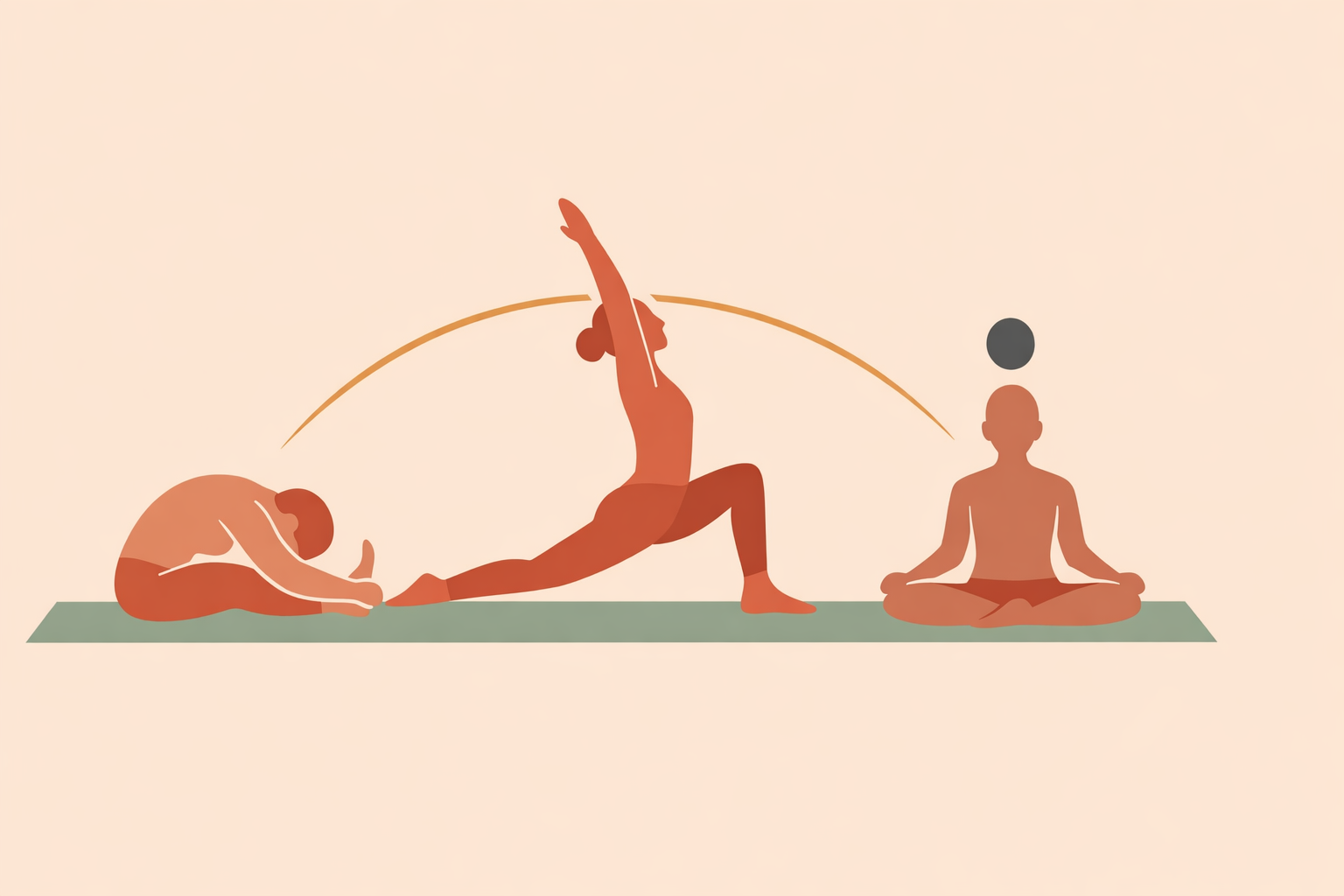
Think in arcs rather than collections of poses. A balanced class warms, builds, peaks, settles, and closes. Breath is the thread that makes those phases feel connected.
A reliable 60-minute structure might look like this:
- 5 minutes: centering, intention, simple breath
- 10 minutes: Sun Salutations
- 15 minutes: standing sequence
- 10 minutes: seated folds and twists
- 10 minutes: gentle backbends, prone work, or legs up the wall
- 5 to 8 minutes: quiet closing with rest, simple breath, or seated stillness
This works because each section prepares the next. Standing work builds heat and attention; seated work refines it; closing shapes help everything settle.
If you teach by theme, let each posture develop the same idea. A lateral-opening theme, for example, can move from Warrior II to Side Angle to Triangle to Half Moon, then into side bends and a quiet twist before rest. Students feel the logic, and the room stays with you.
The close matters as much as the peak. A downshifting breath and a little stillness help people absorb what the practice has stirred, even if time is short.
Living the Practice Beyond the Mat
Technique is only part of the picture. The way someone lives around practice often determines whether yoga becomes steady or stays occasional.
Simple habits support continuity:
- regular sleep rhythms where possible
- unhurried meals
- a daily stretch of time with less digital noise
These aren’t grand rituals. They create enough space to notice breath, choice, and energy in everyday life.
A small morning practice can be enough. Three rounds of a gentle counted breath before checking the phone changes the tone of the day for many students. The exact form matters less than repetition and attention.
When motivation fades, devotion can take ordinary shapes: a quiet bow before stepping on the mat, a single word written on paper, or a regular community practice that reminds you why you began. This is how yoga becomes a relationship you keep returning to, not a task you complete.
Boundaries are part of that practice too. If you’re tired, teach the basics beautifully. If you need rest, take rest. Steadiness grows through honest choices.
Conclusion
Teach from the inside out. Let ātman and the eight limbs set the compass, then let breath, gaze, movement, and language express that compass clearly. Keep the structure repeatable, the cues kind, the touch consent-led, and the close unhurried.
Traditional knowledge stays alive when it is embodied with care. Research can illuminate parts of the path, but the heart of practice is still simple: one breath, one choice, one attentive moment at a time.
Train with Yoga Teacher Training
Build repeatable class structure and consent-led cues in the Yoga Teacher Training course.
Explore Yoga Teacher Training →