Early in a new class—or when you’re shaping a studio schedule—one quiet decision influences almost everything: the style label on the hour. For beginners, “Hatha” or “Vinyasa” isn’t just branding. It signals pace and it signals effort, shaping how safe and manageable the room feels before anyone steps onto the mat.
That first experience matters. When the pace matches a student’s breath, coordination, and confidence, trust builds quickly. When it runs ahead of them, class can feel like a scramble—harder to understand, harder to breathe through, and harder to enjoy.
Key Takeaway: For beginners, the class label is really a promise about pace and demand. Hatha’s slower rhythm gives students time to learn shapes and breathing with less strain, while Vinyasa can work well when it’s simplified, repeated, and paced to the slowest steady breath in the room.
One tradition, two tempos
Hatha and Vinyasa are best understood as two expressions of one wider tradition—not opposing camps. When you hold that view, you’re not “choosing sides.” You’re choosing the tempo that serves the people in front of you today.
In traditional teachings, Hatha is often linked with balancing complementary forces (sometimes described as sun and moon). In modern classes, that wisdom often shows up as a slower pace, more time to set up shapes, and an unhurried relationship with breath. It’s quiet work, but it builds strong foundations.
Vinyasa uses many of the same postures, but organizes them through breath-led transitions and a continuous arc. Instead of treating each posture like a separate island, it trains students to stay connected while moving—steady attention inside motion.
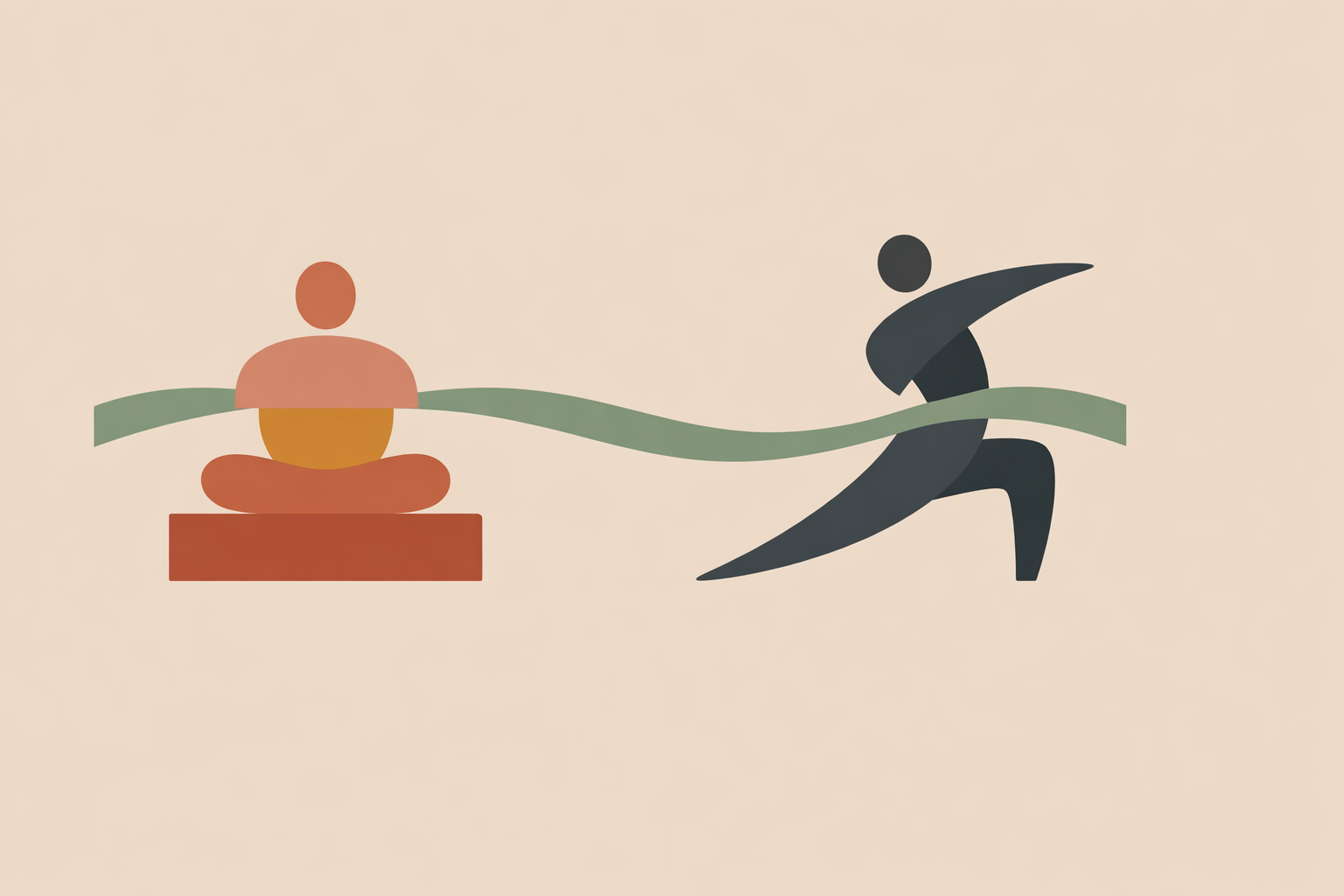
Practically speaking, Hatha usually offers more pauses and more time within each posture. Vinyasa tends to emphasize continuous movement with more frequent transitions. Same roots, different demand.
That distinction is useful for progression: teach core shapes slowly first, then connect them into small, clear sequences later—without losing the integrity of the practice.
Why many beginners do better with a Hatha-first approach
For true beginners, slower is often the most skillful choice. A Hatha-style pace creates space for awareness, steadier breathing, and cleaner organization through the joints. Think of it like learning a new language: you want clear pronunciation before you try speaking quickly.
In common comparisons, Hatha is described as slower and especially approachable for beginners, while Vinyasa typically moves faster and asks for more breath control. That slower gear helps beginners feel oriented rather than rushed.
It also makes teaching simpler and more effective. You can demonstrate, wait, observe, then refine. Students have time for the learning questions that matter: Where is my weight? Can I breathe here? Is this effort or strain?
There’s also a straightforward mechanical reason many teachers start with Hatha. Classic Vinyasa structures often repeat transitions through plank, chaturanga, and upward-facing dog. Comparisons note Vinyasa can be more demanding for newer students. If wrists, shoulders, and core integration aren’t ready, those repetitions can dominate the experience instead of supporting it.
For beginners who are older, returning after time away, or rebuilding confidence, a slower room often feels more sustainable. It leaves enough margin for dignity—so students finish thinking, “I can do this,” and they come back.
What Hatha gives you in the first weeks
Teaching in a Hatha gear offers clear early advantages:
- More observation time: You can actually see how students organize themselves before the next transition arrives.
- More useful options: Variations land better when people aren’t rushing to keep up.
- Steadier breathing: A slower environment supports consistent breath awareness while fundamentals are still forming.
- Less unnecessary strain: Fewer repetitive transitions can mean less early overload for wrists and shoulders.
- More confidence: Students often leave feeling capable rather than overwhelmed.
This doesn’t mean Hatha is “easy.” A slower class can be intense in its own way. The difference is that the intensity is usually easier to understand: students aren’t decoding choreography and learning alignment at the same time.
When Vinyasa is the right first language
Vinyasa can be an excellent entry point for the right group. The real question isn’t whether flow is “better”—it’s whether movement helps these beginners settle, focus, and stay present.
Some beginners regulate through rhythm. They feel more at ease when breath and movement give them a simple track to follow, rather than long holds that can feel exposing or restless.
Vinyasa also tends to offer more cardio stimulus than Hatha, which can suit students with a sports background, good coordination, or a preference for movement-rich practice. Once basic shapes are familiar, short linked sequences can feel energizing and absorbing rather than chaotic.
The key is that “beginner Vinyasa” still needs to be beginner yoga: simplified, repeated enough to become learnable, and anchored in shapes students already understand.
How to introduce Vinyasa without losing the room
If you start with flow—or introduce it early—keep the structure spare. Stability first, then motion. Essentially, you’re building trust in the pathway before you increase the speed.
- Use short arcs: Link just a few shapes at a time rather than long, memory-heavy sequences.
- Repeat before adding: Let students revisit the same pattern until it feels familiar.
- Set the pace by breath: Teach to the slowest sustainable breath in the room, not the most athletic student.
- Lower the load: Step back instead of jumping, and offer knees-down or lifted-hand options when needed.
- Keep transitions intelligible: If the transition becomes more important than the posture, the sequence is too complex for day one.
Once beginners have a bit of alignment familiarity, flow often changes character. What felt scrambled in week one can feel coherent by week three—because students finally have landmarks.
Teaching mixed-level rooms without forcing one pace on everyone
Not every class is neatly “beginner” or “experienced.” In mixed-level rooms, the most elegant approach is often layering: one shared foundation, with clear branches.
You might teach a grounded Hatha base, then offer a small flow option built from the same shapes. Students who want steadiness can stay with the static version, while those ready for more rhythm can explore the moving version—without splitting the room.
This also keeps language respectful. Instead of labeling people by ability, you offer choices side by side and let students select what fits their energy and stability that day.
“What distinguishes a rigorous training from a series of drop-ins is the demand for critical thinking.”
That applies directly to pacing. Strong teaching isn’t about chasing the trendiest format—it’s about choosing the clearest on-ramp, then adjusting as the group shows you what it can hold.
Choosing between Hatha and Vinyasa for beginners
If you want a simple rule: start with Hatha when the group is truly new, unsure, deconditioned, or mixed in confidence. Start with simplified Vinyasa when the group is coordinated, movement-oriented, and likely to focus better through rhythm than stillness.
A practical checklist:
- Choose Hatha first if: students are brand-new, hesitant, older, rebuilding consistency, or easily overwhelmed by transitions.
- Choose beginner Vinyasa first if: students are physically confident, pick up movement patterns quickly, and settle through motion.
- Blend both if: you want a grounded opening with the option of a short, breath-led flow later in class.
Hatha vs Vinyasa isn’t a rivalry—it’s a pacing decision. Choose the tempo that helps beginners feel capable and supported, then build from there with patience.
Advance with Yoga Teacher Certification
Use these pacing principles in real classes with the Yoga Teacher Certification.
Explore Yoga Teacher Certification →