APD clients and families often want practical help quickly: quieter classrooms, lighter meetings, fewer difficult evenings after noisy days. At the same time, questions can pull a practitioner beyond a useful scope. A parent may want your opinion on whether APD is “really there.” A manager may ask you to suggest the right device. A teen may describe sudden headaches alongside a new struggle with speech in quiet spaces. When support becomes blurry, trust often drops and progress slows.
A steadier approach is narrower and, in practice, more effective. In APD coaching, the focus stays on daily functioning, ear–brain–environment problem-solving, regulation, communication, and self-advocacy, while specialist assessment and device decisions stay with the appropriate professionals. Boundaries do not reduce impact. They make the work clearer, safer, and easier to apply in real life.
Key Takeaway: Non-clinical APD coaching works best when scope is clear and the ear–brain–environment lens guides each decision. That means focusing on listening load, environment design, pacing, communication habits, self-advocacy, and clean referral pathways when questions move beyond coaching.
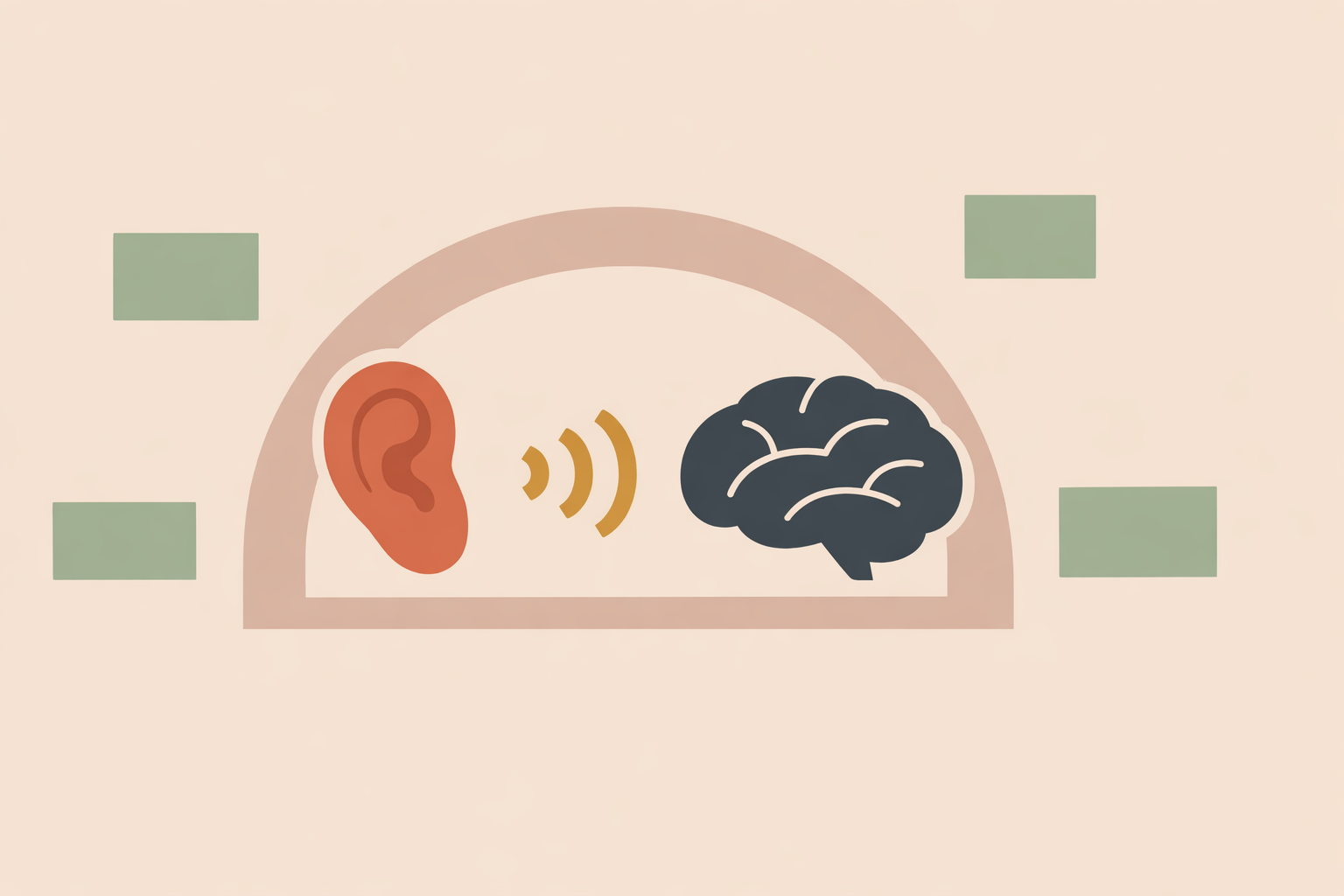
Understanding APD through the ear–brain–environment lens
The ear–brain–environment lens keeps APD practical. APD is commonly described as difficulty making sense of sound even when hearing is within typical ranges. Day to day, listening difficulty often intensifies in noisy, fast-paced settings where speech has to compete with background sound.
This framing shifts the focus from personal fault to situational load: what in this moment is making listening harder? Distance, echo, multiple speakers, and rapid turn-taking can stack the odds against comprehension, even for someone who does fine in a quiet room.
Clients often find this perspective relieving. It validates lived experience without forcing everything into a label-first conversation, and it naturally leads to action. Each layer offers options: adjust the environment, change timing, shape communication, or protect recovery rhythm.
Listening load, effort, and the load-capacity balance
Many clients describe a distinct effort cost to listening. It’s not only whether words were technically heard; it’s the energy spent sorting signal from noise, filling gaps, and staying socially present. In group settings and online calls, listening can feel exhausting.
A strong coaching move is to map listening load so the client can see patterns instead of guessing. A simple log can include:
- time of day
- place
- type of task
- number of speakers
- background noise
- effort score from 0 to 10
- recovery needed afterward
A note might read: “12:30, cafeteria, two friends, loud clatter, effort 8/10, needed 20 minutes alone afterward.” Once patterns are visible, choices get simpler: move to a quieter corner, reduce distance from the speaker, use written backup, break up a high-load day, and protect recovery time after draining situations.
A strengths-based view helps here. Many challenges reflect a mismatch between the person’s needs and the setting’s demands. When context improves, capacity often shows up more consistently.
Defining your APD coaching lane clearly
Clients do best when scope is explicit rather than implied. Naming your role early prevents confusion later and keeps your work focused on what you can reliably deliver.
What you can offer:
- support with sound-friendly spaces, routines, and communication agreements
- pacing, energy awareness, and recovery planning
- self-advocacy scripts and role-play
- progress logs focused on effort, fatigue, and strategy use
What you do not offer:
- assessment or labels
- interpretation of scores or reports
- device selection or technical recommendations
- promises that move beyond a coaching role
Scope-safe language supports trust. Keep the emphasis on goals, habits, access, communication, and well-being, and let daily observations guide what you try next.
Designing sound-friendly environments and routines
Environment is often the quickest place to begin, because small changes can reduce effort immediately. In many cases, face-to-face communication and reduced room noise can make a meaningful difference.
Useful adjustments may include:
- facing the speaker directly
- sitting away from doorways, vents, or open windows
- choosing smaller rooms for important conversations
- closing doors during meetings or study sessions
- reducing echo with softer materials
At home, school, or work, rugs, curtains, and bookshelves often soften echo and reduce reverberation. These are familiar, accessible changes that can noticeably improve listening comfort.
Classrooms are a clear example. Improved classroom acoustics can support listening, learning, and well-being for many students, not only those with APD-related needs. A designated quiet space for independent work is also a practical support, even when schools use different language for it.
Universal design often makes APD support easier to implement. Visual aids, written instructions, captions, concise summaries, and a moderate speaking pace reduce reliance on listening alone, which lowers load for everyone.
Routines matter as much as rooms. Many people have “best hours” when attention is steadier and effort is lower. Scheduling complex listening then, and avoiding back-to-back high-load tasks, can change how the whole week feels.
Supporting regulation and energy
APD coaching focuses on steadiness: noticing patterns, reducing unnecessary strain, and building reliable ways to move through demanding situations.
Many practitioners work with basic state literacy because stress and overload change how people connect and communicate. When someone is already braced or rushed, listening usually becomes harder, and social communication is shaped by these shifts.
Your role is to help clients identify what supports steadiness before, during, and after heavy listening. Often that looks like:
- checking posture and jaw tension before a meeting
- taking brief movement breaks between conversations
- using a slower exhale to reduce tension
- leaving space after a high-load event rather than pushing straight into the next one
Many clients also do better when cross-sensory load is lower. Softer lighting, less visual clutter, and fewer competing inputs can make it easier to track speech. This aligns with long-standing, practical wisdom: the calmer the overall sensory field, the easier it is for the mind to organize what it hears.
Quiet recovery time is another core tool. Time to recover after heavy listening can protect energy and make the rest of the day more workable. Recovery can be simple: a low-input break, a walk, a quiet room, or a pause from conversation.
When clients start honoring listening effort instead of pushing through, consistency often improves. Energy gets reserved for what matters most.
Coaching communication and self-advocacy
Self-advocacy is what makes support sustainable. The aim is for the client to recognize what helps and ask for it clearly, across settings and relationships.
Direct practice helps many people. Self-advocacy practice can include learning to pause, name the problem simply, and request a specific adjustment.
Communication partners can make an immediate difference with a few steady habits. Moderate speaking pace, shorter sentences, and brief pauses support comprehension. It also helps when the listener can restate key points, since repeating instructions back can reveal where a message became unclear without adding blame.
Simple scripts often work well:
- School: “I follow best with written steps and a seat where I can see the speaker clearly.”
- Work: “Could we use a written agenda and a short summary afterward? That helps me keep up.”
- Social: “I do better when one person speaks at a time. If I miss something, I’ll ask you to repeat it.”
Accommodations don’t change what someone is capable of contributing; they change access. That distinction is often reassuring for clients, families, and colleagues.
Knowing when to refer and how to collaborate well
Strong APD coaching includes knowing when something belongs elsewhere. If listening difficulties are new, rapidly worsening, unusually intense, or accompanied by other concerning changes, pause and encourage outside assessment. The same applies when clients want explanations of reports or advice about devices.
You can stay warm and clear at the same time:
- “We’ve identified some useful daily supports. For questions about testing, it would be helpful to speak with the appropriate specialist.”
- “I can help you prepare your questions and keep working on day-to-day strategies while you gather more information.”
- “I’m not the right person to interpret scores, but I can help you translate your experience into practical needs.”
This protects the client and preserves the integrity of your work. When everyone stays in a clear lane, collaboration becomes smoother, and progress is easier to track.
Conclusion: Practical, respectful APD support
APD coaching is most effective when it stays grounded in daily life. The supports that matter are often steady and realistic: clearer environments, multimodal information, sensible pacing, recovery time, and communication habits that reduce friction.
Seen through an ear–brain–environment lens, APD is also about context, energy, rhythm, and access. Improve the context and listening becomes more workable. Protect energy and comprehension becomes more consistent. Teach self-advocacy and clients can shape the conditions they need.
Keep the work concrete and ethical. Track effort, notice patterns, and avoid stacking high-load tasks where possible. Build quieter transitions around demanding conversations, and treat rest and sensory protection as foundations.
As with any coaching area that overlaps with specialist services, staying scope-clear matters most when things change suddenly or questions move into assessment, reports, or devices. In those moments, a clean referral pathway keeps clients supported while the right professionals handle the right decisions.
Train in APD Coaching Skills
Build scope-clear, practical support with the Auditory Processing Disorder Coach Certification.
Explore APD Certification →