The four-circle ikigai diagram is a tool many coaches reach for when a client asks about purpose. It can spark quick insights, but it can also stall a session. Career labels get polished while the client’s days still feel flat, and the framework turns into a branding exercise rather than a lived source of direction. Most clients don’t need a slogan. They need a grounded way to notice what gives life value, then build more of it within real constraints.
Key Takeaway: Strong ikigai coaching treats purpose as a lived, evolving orientation rather than a tidy career diagram. It listens for meaning in ordinary practices, relationships, values, and small joys; separates flow from purpose; and turns insight into gentle, testable actions. Done well, it respects cultural roots, honors real-life limits, and helps clients build daily evidence of a life that feels worth living.
Looking beyond the four-circle diagram
The four-circle diagram can open a useful conversation, but it isn’t the concept itself. In practice, it can push clients into tidy categories before they’ve understood what actually makes their life feel worth showing up for.
Contemporary scholarship often emphasizes ikigai-kan, the felt sense that life is worth living, over any single model. That same work suggests there is no single definition that fits everyone.
That’s good news for coaches. You’re not trying to fit someone into a template. You’re helping them recognize the patterns that make their life feel more alive and worthwhile, then translating those patterns into choices they can sustain.
A simple shift in questions helps the work stay real:
- Instead of “What is your one purpose?” ask, “What has been making life feel worth showing up for lately?”
- Instead of “What career fits your calling?” ask, “Where do you feel useful, connected, or quietly fulfilled?”
- Instead of “What should you do with your life?” ask, “What would you like more of in your actual days?”
Listening for ikigai in ordinary life
Japanese understandings of ikigai often include recurring dimensions such as valued experiences, authentic relationships, and a sense of direction. For coaching, these are more reliable listening posts than job titles alone.
In session, listen across a few steady areas:
- What the client values
- Who they feel most themselves with
- What brings steadiness or quiet joy
- Where they feel useful or contributive
- What they return to when life is busy
Someone who says, “I don’t know my purpose,” may still brighten while describing repairing clothes, checking in on neighbors, organizing family gatherings, teaching beginners, or walking by the sea at sunrise. Those moments aren’t side notes. They’re often the start of a truer direction.
A practical exercise is a small joys inventory. Invite the client to note three ordinary moments each day for one week that brought ease, belonging, curiosity, or satisfaction. Keep it simple: chatting with the baker, mending a sleeve, solving a small household problem, hearing a child laugh, making something with their hands.
By the end of the week, patterns usually appear. Those patterns often carry more integrity than a mission statement created too quickly.
Practicing presence and ichi-go ichi-e in session
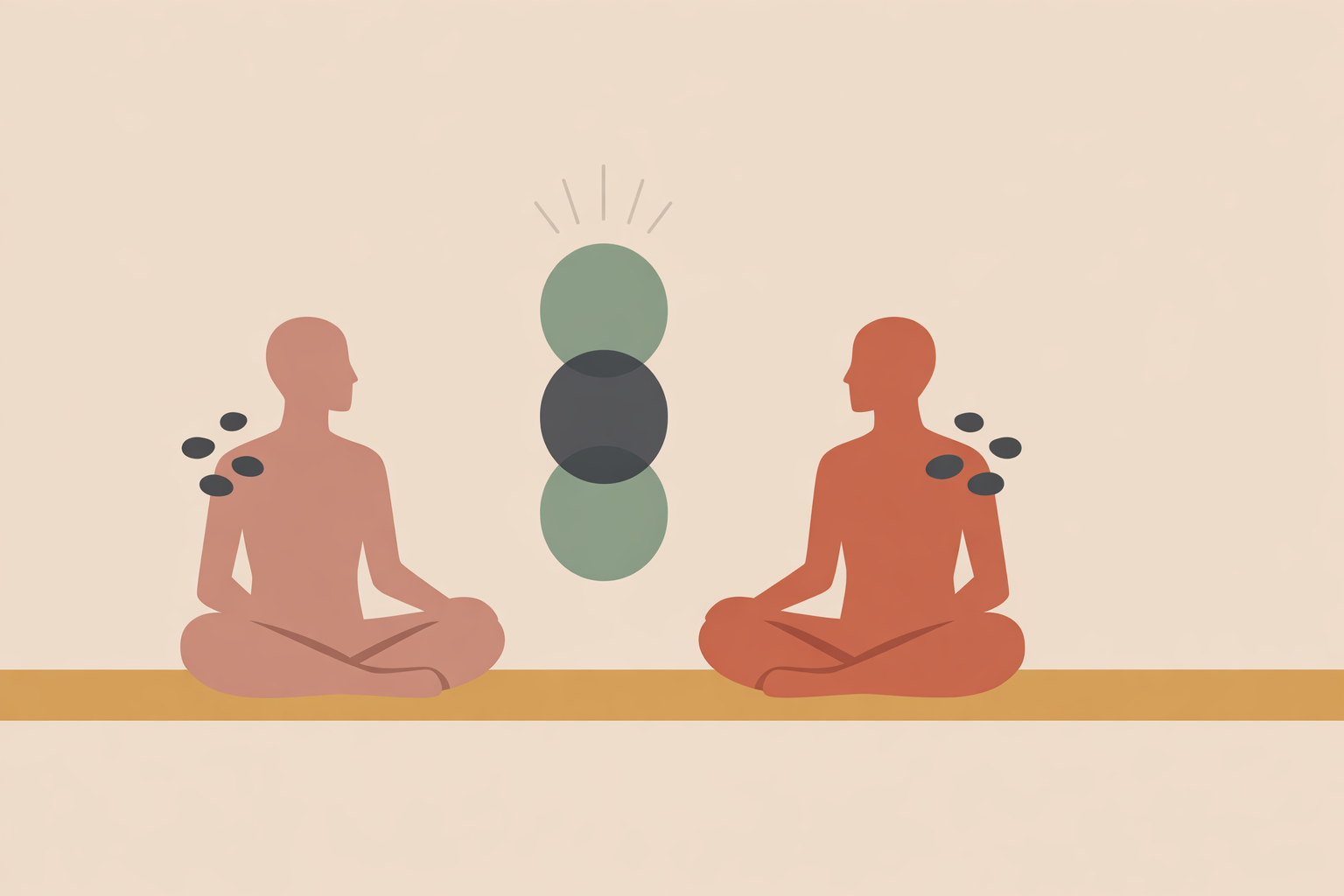
Ikigai work deepens when the coach brings real presence. When you slow down enough to stay with what’s here, meaning has room to surface. This is where ichi-go ichi-e—one time, one meeting—becomes a useful orientation.
Each conversation is unrepeatable. The person in front of you is showing a living relationship with value, strain, hope, memory, and possibility. Meeting that well requires attention, not rushing.
In practice, presence can look like:
- Beginning with a few seconds of arrival before speaking
- Letting the first minutes breathe without offering solutions
- Tracking changes in tone, pace, and energy
- Reflecting back the phrases that carry life
- Allowing silence instead of filling it too quickly
Often, the strongest clue is brief. A client may speak confidently about goals, then soften for a moment while mentioning “the quiet house at dawn” or “when my niece asks me to show her how.” Those fragments are worth staying with.
Separating flow from purpose
Flow and purpose often overlap, but they are different experiences. Flow points to absorption, when attention and skill lock together. Purpose points to values, contribution, and what feels deeply worth doing.
Some activities are absorbing but not especially meaningful to the person. Others feel meaningful yet don’t create much flow. Noticing the difference prevents clients from chasing intensity when what they really want is significance.
Try questions that separate the strands:
- Flow: When were you so engaged that time changed shape?
- Meaning: When did you feel aligned with what matters to you?
- Contribution: When did your actions feel useful beyond immediate enjoyment?
A straightforward practice is two brief logs for a week:
- Flow log: Record one moment of deep absorption each day.
- Meaning log: Record one moment each day that felt value-aligned, connective, or contributive.
Review where they overlap. That overlap often points toward directions like mentoring, craft, hospitality, learning, organizing, nature-based routines, or forms of community care the client hasn’t named clearly yet.
Turning insight into micro-experiments
Ikigai becomes clearer through lived evidence. Once a pattern shows up, the next step is a small, respectful experiment that fits the client’s week.
Micro-experiments keep purpose grounded. They help clients test meaning in real life, especially when energy, finances, family responsibilities, or uncertainty make big moves unrealistic.
A good experiment is:
- Small enough to do this week
- Specific enough to observe
- Flexible enough to respect real life
- Meaningful enough to matter
For example:
- If a client values repair and neighborliness, they might offer a short “mend and tea” hour once a month.
- If they value teaching, they might explain one skill to a younger relative or colleague this week.
- If they feel alive in nature, they might protect one recurring solo walk and treat it as non-trivial.
- If they miss community, they might return through one small act of participation rather than a major commitment.
Keep the review questions plain:
- How did this feel before, during, and after?
- Did it create energy, meaning, or connection?
- Would you like to repeat, refine, or release it?
Building plans that can actually hold
Purpose work becomes useful when it fits the person’s real circumstances. A strong plan should feel light enough to carry, not heavy enough to avoid.
Habits tend to hold better when they attach to an existing routine. If a client wants a brief evening reflection on what made the day worthwhile, pairing it with making tea or brushing teeth often reduces friction.
A personalized coaching plan can include:
- A valued direction
- One or two small weekly actions
- Existing supports and strengths
- Likely barriers
- Signs that the direction feels alive
- A review date
The spirit is gentle refinement: notice, name, test, review, adjust. Over time, clients trust not only what they say matters, but what their days consistently confirm, whether in a structured ikigai journey or a looser rhythm of reflection.
Meeting limiting beliefs with kindness and realism
Ikigai work often meets protective stories: “It’s too late for me.” “My strengths are ordinary.” “I don’t have time for any of this.” These beliefs soften when they’re met with respect, then explored with small, dignity-preserving tests.
A useful coaching move is to treat the belief as a hypothesis rather than a fact.
For example:
- “I have no purpose” can become “I haven’t yet found a form of meaning that fits this season.”
- “I’m too old to change” can become “I may need a version of change that matches my energy and responsibilities.”
- “Nothing I do matters” can become “Let’s look for places where your presence already makes a difference.”
Then pair the reframe with one tiny action that can gather new evidence.
When life is heavy, take a restoration-first approach
There are seasons when a person doesn’t need ambitious purpose planning. They need steadiness, space, support, and small sources of aliveness. When exhaustion, caregiving, grief, or chronic strain are present, restoration-first coaching is often the more humane path.
That means asking different questions:
- What would make this week 1% more supportive?
- What can be simplified?
- What small joy or source of relief is still available?
- Which value most needs protecting right now?
This is still ikigai work. In demanding seasons, purpose may look like protecting one meaningful thread: staying connected to a loved one, keeping a creative ritual alive for ten minutes, or preserving a sense of usefulness in a smaller form.
Good coaching names constraints clearly—time, finances, discrimination, family load, access, fatigue—without shame, and then works with possibility inside reality.
Cultural humility and respect for Japanese roots
Ikigai isn’t a blank self-help concept. It comes from a cultural context and an everyday way of speaking about what makes life worth living. In Japan, it has long been part of ordinary conversation, especially as people keep finding value across different life stages.
Research also describes ikigai as deeply rooted in daily life, which helps explain why it’s easily misunderstood when reduced to a career graphic alone.
Cultural humility means holding the concept with care. Adaptation isn’t the same as ownership, and interpretation shouldn’t replace the roots.
In practical terms:
- Use Japanese terms with context, not as decorative slogans.
- Do not present the four-circle diagram as the definitive meaning of ikigai.
- Respect relational and community-based understandings of purpose.
- Invite clients to connect ikigai with their own cultural and ancestral ways of finding value in living.
This matters with clients from relational or collectivist backgrounds. Starting with roles, belonging, contribution, and responsibilities can be a more respectful and accurate entry point than leading with personal passion.
Weaving ikigai into everyday coaching practice
At its best, ikigai coaching is simple in rhythm and deep in effect. Arrive fully. Listen for what makes life feel worth living. Notice the threads already present. Test something small. Review honestly. Adjust gently.
This rhythm keeps the work practical. It helps clients move from abstract purpose to lived direction, and from pressure to steady practice, which is also central to purpose and life design work more broadly.
Traditional wisdom reminds us that meaning is often cultivated the way daily skills are cultivated: through attention, repetition, and care. Held in that spirit, ikigai becomes something clients can feel in the shape of their days, and for coaches developing this approach, Ikigai Life Coach Certification offers a direct next step.
Explore Ikigai Life Coach Certification
Deepen this approach with the Ikigai Life Coach Certification and guide clients from insight to lived, weekly practice.
Explore Ikigai Certification →